

The kick-off meeting is one of the most important moments in any project. When executed well, it aligns expectations, clarifies objectives, defines responsibilities, and creates the foundation for a successful working relationship.
Yet many businesses treat kick-off meetings as a simple introduction call rather than a strategic project management tool. The reality is that many project issues can be traced back to a lack of alignment at the beginning. Unclear goals, scope creep, missed deadlines, shifting expectations, and communication breakdowns often emerge from conversations that never happened at the outset.
An effective kick-off meeting helps prevent these issues before they arise. It builds trust, strengthens accountability, surfaces potential risks early, and ensures everyone is working toward the same outcome.
In this guide, we’ll show you a step-by-step playbook for running client kick-off meetings that create alignment, reduce misunderstandings, and build momentum from day one.
1. Prepare like a project leader
The quality of your kick-off meeting is determined by the preparation that happens beforehand. Walking into the meeting without a clear understanding of the project, stakeholders, and objectives can quickly undermine confidence and create confusion.
Before the meeting, take time to prepare the following:
- Project summary: Create a concise project overview that outlines the key details everyone needs to understand. This should include the project’s objectives, scope of work, major deliverables, timeline, budget considerations, and any assumptions or constraints that could impact delivery. Having this information documented helps ensure everyone starts from the same understanding and provides an opportunity to address any discrepancies early.
- Stakeholder list: Identify everyone involved in the project and clarify their role. This includes decision-makers, project sponsors, primary contacts, subject matter experts, approvers, and delivery team members. Understanding who has authority, who provides input, and who is responsible for approvals will help prevent communication gaps and decision-making bottlenecks later in the project.
- Meeting agenda: Send a structured agenda before the meeting so attendees know what will be discussed and what is expected of them. A clear agenda keeps the conversation focused, ensures critical topics are covered, and demonstrates professionalism from the start. Where possible, share any relevant documents in advance to allow stakeholders to review them and arrive prepared for meaningful discussion.
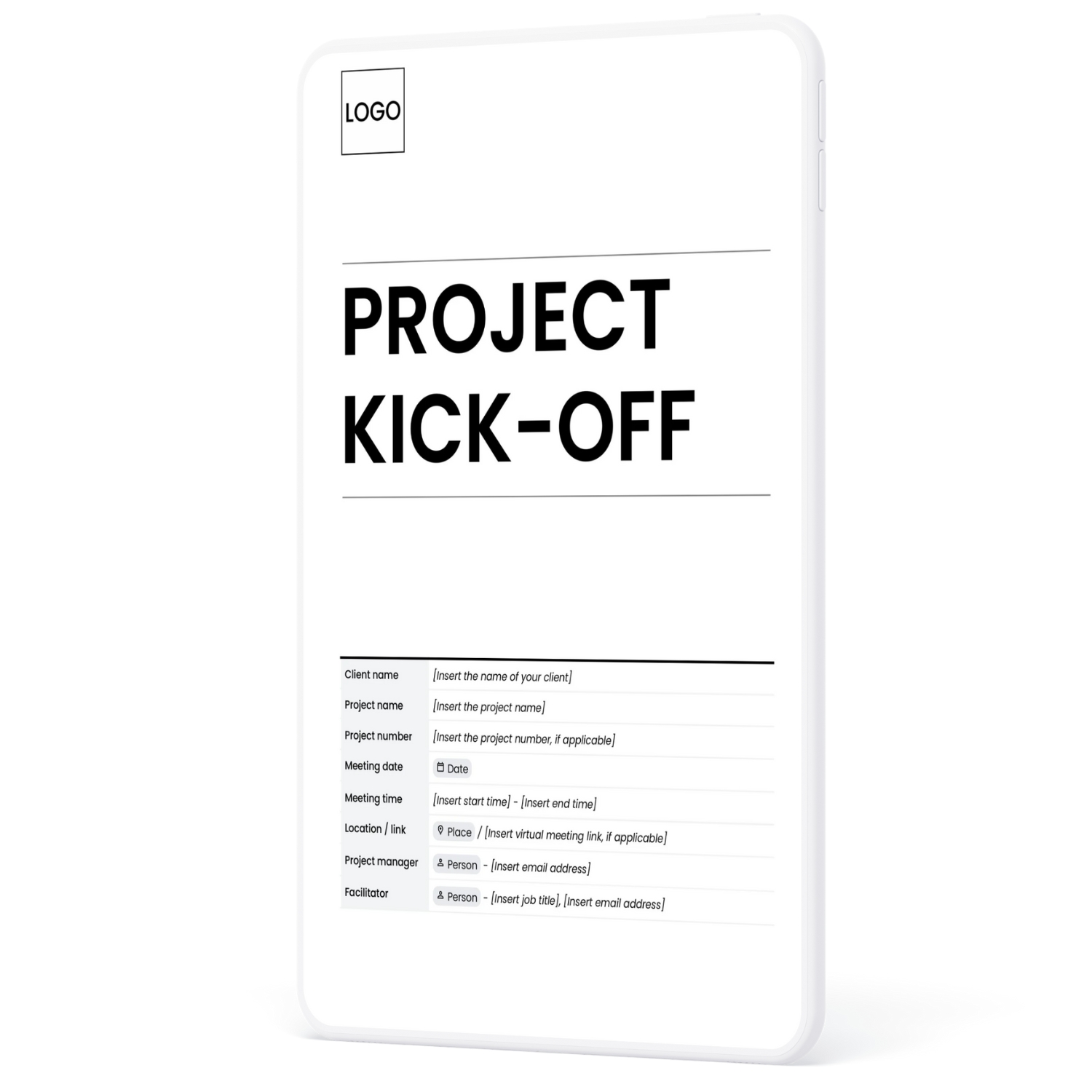
Kick-off client projects like a pro
Run professional kick-offs with confidence using this structured agenda template designed to align expectations, clarify goals, and keep projects on track.
2. Begin with introductions and objectives
The first few minutes of a kick-off meeting set the tone for the entire project. Start by allowing each participant to briefly introduce themselves and explain their role. This helps establish relationships, clarify responsibilities, and ensure everyone understands who is involved.
Once introductions are complete, focus on outcomes. Provide a high-level overview of the project’s purpose, the business problem being solved, and the results the client hopes to achieve.
Starting with business objectives creates alignment and prevents discussions from becoming too focused on tasks and deliverables. For example: “We’re launching this website redesign to improve lead generation and create a stronger user experience. Success will be measured by increased conversions, improved navigation, and a modernized brand presentation.”
3. Define what success looks like
One of the most common causes of project frustration is a lack of agreement on what success actually means. Different stakeholders often have different priorities, assumptions, and expectations. Use the kick-off meeting to establish clear success criteria by asking questions such as:
- What are the primary goals of this project?
- How will success be measured?
- Which outcomes are most important?
- Are there any non-negotiable requirements?
When goals are documented and agreed upon from the beginning, decision-making becomes significantly easier throughout the project lifecycle. If disagreements arise later, the team can refer back to the objectives established during the kick-off.
4. Eliminate scope ambiguity early
Scope misalignment is one of the fastest ways for a project to go off track. Never assume everyone interprets the proposal or contract in the same way. A kick-off meeting should remove any uncertainty about what is being delivered and what is not.
Review the scope of work in detail, including:
- Deliverables
- Assumptions
- Exclusions
- Client responsibilities
- Project dependencies
For example, when discussing a website project, clarify:
- Number of pages
- Content ownership and responsibilities
- Revision limits
- Third-party integrations
- Testing and quality assurance requirements
The more specific the discussion, the less likely scope creep becomes later in the project. Many project managers use a Project Initiation Document (PID) or scope checklist to ensure nothing is overlooked.
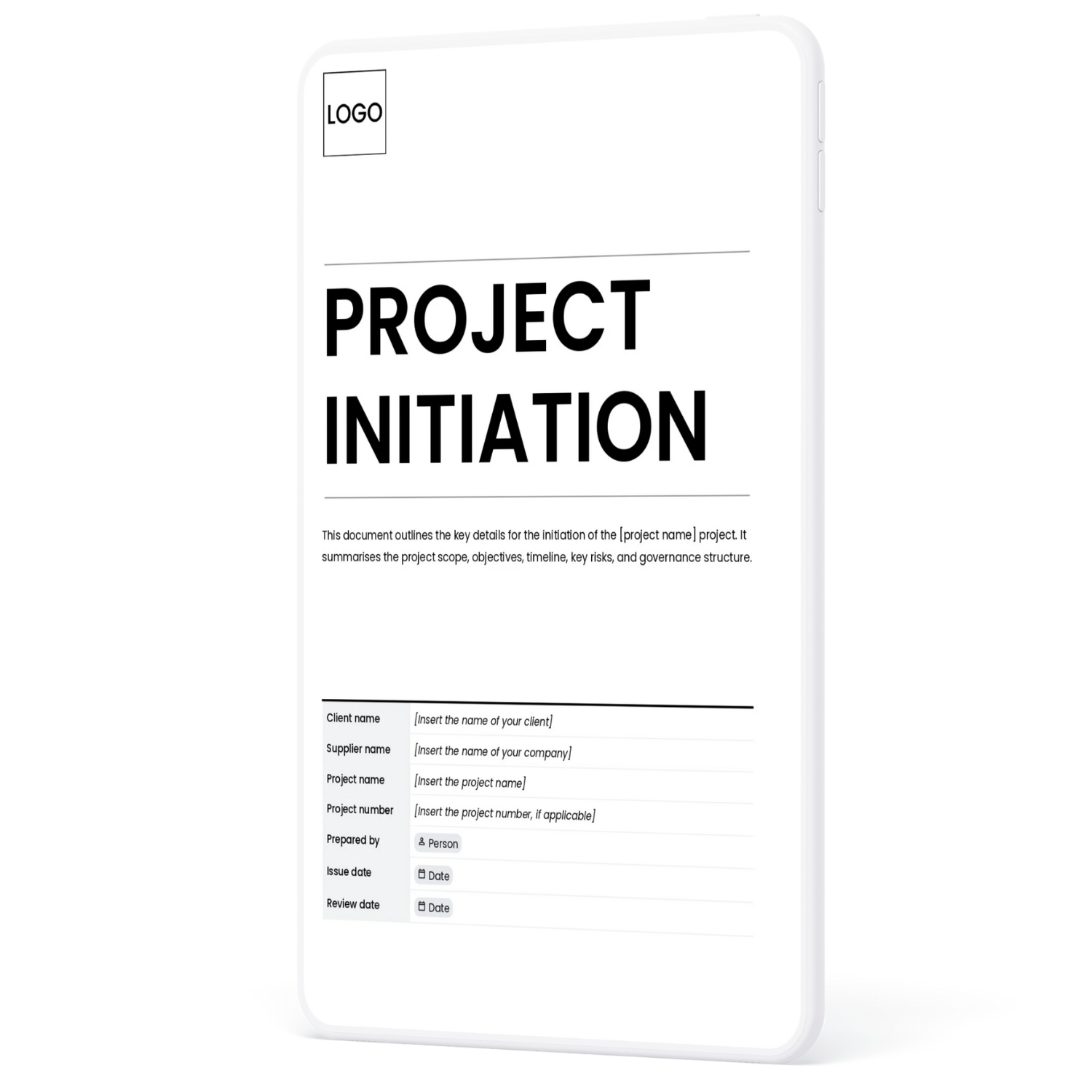
Project success starts with structure
Elevate project planning with this comprehensive Project Initiation Document template. Define scope, align stakeholders, and ensure clear project direction from day one!
5. Clarify ownership and accountability
Projects often slow down when responsibilities are unclear. Questions such as “Who’s responsible for this?” or “Who needs to approve that?” can create unnecessary delays if ownership hasn’t been established. Use the kick-off meeting to define responsibilities clearly, including:
- Who approves deliverables
- Who provides feedback
- Who manages project communication
- Who supplies content, assets, or information
- Who makes technical or strategic decisions>
A simple responsibility matrix can dramatically improve accountability and help the project move forward more efficiently.
6. Agree on how the project will be managed
Even strong projects can struggle when communication expectations are unclear. Use the kick-off meeting to establish how the team will work together, including:
- Communication channels: Determine which tools and platforms will be used throughout the project, such as email, project management software, Slack, Microsoft Teams, or scheduled meetings.
- Response times: Set expectations for turnaround times on emails, feedback requests, approvals, and urgent issues.
- Meeting cadence: Decide whether recurring status meetings are required and how frequently they should occur. Regular check-ins help maintain momentum and surface issues before they become major problems.
7. Walk through the timeline together
Clients often focus on the final delivery date without fully understanding the milestones required to get there. Review the project timeline step by step, covering:
- Major project phases
- Key deliverables
- Review periods
- Approval deadlines
- Launch or implementation dates
Be transparent about dependencies that could affect delivery schedules. Setting realistic expectations early reduces friction and creates shared ownership of the schedule. For example: “If content is delivered two weeks late, the launch date will likely move accordingly”.
8. Surface risks before they become problems
Every project carries risk. The purpose of a kick-off meeting is not to avoid discussing challenges but to identify them before they impact delivery. Potential risks may include:
- Resource availability
- Delayed approvals
- Technical limitations
- Third-party dependencies
- Budget constraints
- Competing business priorities
Openly discussing risks demonstrates professionalism and allows the team to create mitigation plans before issues arise.
9. Create a single source of truth
A successful kick-off meeting should produce clear documentation, including:
- Key decisions
- Project objectives
- Scope confirmations
- Responsibilities
- Timeline commitments
- Risks and dependencies
- Action items
Shortly after the meeting, distribute the notes to all participants. Documenting agreements creates a single source of truth and reduces the risk of conflicting interpretations later in the project.
10. Finish with clear next steps
Never end a kick-off meeting with a vague statement such as, “We’ll be in touch”. Instead, leave every participant with a clear understanding of what happens next. For example:
- Client provides brand assets by Friday
- Discovery phase begins on Monday
- Initial concepts delivered within two weeks
- Weekly status meetings scheduled every Wednesday
Every attendee should leave knowing exactly what they are responsible for and when it needs to happen. Clear next steps create momentum, maintain accountability, and ensure the project begins moving forward immediately.
Common mistakes to avoid
Even experienced project managers can make mistakes during project initiation. The good news is these issues are easy to prevent once you know what to look for.
- Skipping documentation: If it isn’t written down, it doesn’t exist. Always document key decisions, agreements, and scope details to avoid confusion later.
- Rushing through scope definition: An unclear scope is one of the fastest ways a project can go off track. Take the time to clearly define and confirm deliverables before work begins.
- Ignoring stakeholder alignment: Different stakeholders often have competing priorities. Make sure everyone agrees on goals, expectations, and success criteria early on.
- Focusing only on deliverables: Deliverables matter, but outcomes matter more. A successful project is defined by business impact, not just task completion.
- Failing to establish communication rules: Unclear communication leads to delays, duplication, and frustration. Set expectations early around updates, tools, response times, and meeting cadence.
A well-run client kick-off meeting sets the tone for the entire project. For freelancers, studios, and small businesses, a structured kick-off process prevents misalignment, scope issues, and unnecessary back-and-forth later in the project lifecycle.
When your kick-off meetings are consistent and well-structured, clients feel more confident, teams execute more efficiently, and projects start with the strongest possible foundation for success.
This post is also published on Medium.com.