

Every great campaign starts as an idea. A product launch, a seasonal promotion, a rebrand, or a new service you’re excited to put in front of the right people.
In this guide, we’ll walk through a practical, step-by-step blueprint to take your digital campaign from a raw concept to a successful, high-impact launch.
Step 1: Define your core objective and KPIs
Before you think about platforms, visuals, or hashtags, you need absolute clarity on why you are running this campaign. A strong campaign purpose is specific and tied to an outcome. Vague goals such as “increase brand awareness” or “get more sales” are too broad to guide tactical decisions.
A confident campaign plan begins with specific, measurable objectives. Ask yourself:
- What is the primary business goal? Are you launching a new product, generating qualified leads for a service, driving registrations for an event, or reactivating dormant subscribers?
- What does success look like in numbers? Attach a tangible metric to your goal. Instead of “get more leads,” aim for “generate 250 marketing-qualified leads over a 14-day period.”
Once your primary objective is locked in, identify your Key Performance Indicators (KPIs). If your goal is lead generation, your KPIs might include Cost Per Acquisition (CPA), landing page conversion rate, and total form submissions. If your goal is brand awareness, you might track video completion rates, reach, and organic shares. Having these targets upfront ensures every team member knows how success will be measured.
Step 2: Know your audience inside and out
A common trap in marketing is trying to speak to everyone. When your message is tailored to appeal to the masses, it usually ends up resonating with no one. The more clearly you can describe the people you want to reach, the easier every other decision becomes, from the platform you choose to the words you use.
Before drafting campaign messaging, build a precise audience profile for this specific initiative. If you have existing customer data, use it. Consider:
- Their pain points: What immediate problem are they facing that your campaign solves?
- Their digital habits: Where do they spend their time online? Are they scrolling through LinkedIn during their morning commute, browsing Instagram stories in the evening, or searching for detailed reviews on Google?
- Their objections: What hesitation might prevent them from taking action? (e.g., price, complexity, trust, lack of time).
When you understand your audience’s mindset, you can tailor your messaging to address their specific desires and fears, creating a much stronger emotional connection and higher conversion potential.
Step 3: Map out the customer journey and channel mix
Campaigns require a thoughtfully mapped customer journey. Your audience will only see your campaign for a few seconds at a time. That means your core message needs to be clear, consistent, and easy to repeat across every touchpoint.
Break your campaign down into standard marketing funnel stages:
- Awareness (top of funnel): How will people discover your campaign? This is where educational content, paid social ads, and influencer partnerships come into play.
- Consideration (middle of funnel): Once they land on your site or engage with your brand, how do you nurture them? Think case studies, retargeting ads, or a lead magnet.
- Conversion (bottom of funnel): What’s the final push? Limited-time discounts, clear calls to action on landing pages, or high-urgency email sequences are best used here.
Select your channels based on where your audience spends their time. If you’re running a B2B SaaS campaign, LinkedIn and targeted search ads will likely take priority over TikTok. But be selective; it’s better to execute 2-3 channels well than to spread your effort thinly across 6.
Map your channels in 5 minutes
Not sure which channels and CTAs fit each funnel stage? Our free one-page matrix maps awareness, consideration, and conversion.
Step 4: Establish a realistic timeline and resource plan
One of the biggest confidence killers in campaign planning is scope creep and unrealistic deadlines. Start with your hard launch date and work backward, mapping out the major phases and building in time for feedback and revisions. Reviews and approvals are where schedules most often slip, so give them dedicated time.
- Launch day: Go live.
- T-minus 3 days: Final quality assurance (QA) checks, testing all links, tracking codes, and email sequences.
- T-minus 1 week: Content approval, creative asset finalization, and platform setup.
- T-minus 3 weeks: Content creation (copy, design, video editing), technical setup, and stakeholder alignment.
Designate a clear owner for copywriting, design, technical implementation, and performance tracking so accountability is crystal clear.
Step 5: Draft a bulletproof campaign brief
The single most effective tool for maintaining confidence and alignment throughout a campaign lifecycle is a comprehensive project brief.
This document serves as the single source of truth for your entire team, whether you are a solo entrepreneur working with freelance contractors or a marketing manager leading an in-house team. It bridges the gap between high-level strategy and daily execution, and ensures the creative execution stays tightly aligned with the strategic goals.
Your brief should capture:
- Campaign overview and objectives
- Target audience and core messaging pillars
- Deliverables and channel breakdown
- Timeline, milestones, and responsibilities
- Budget allocation
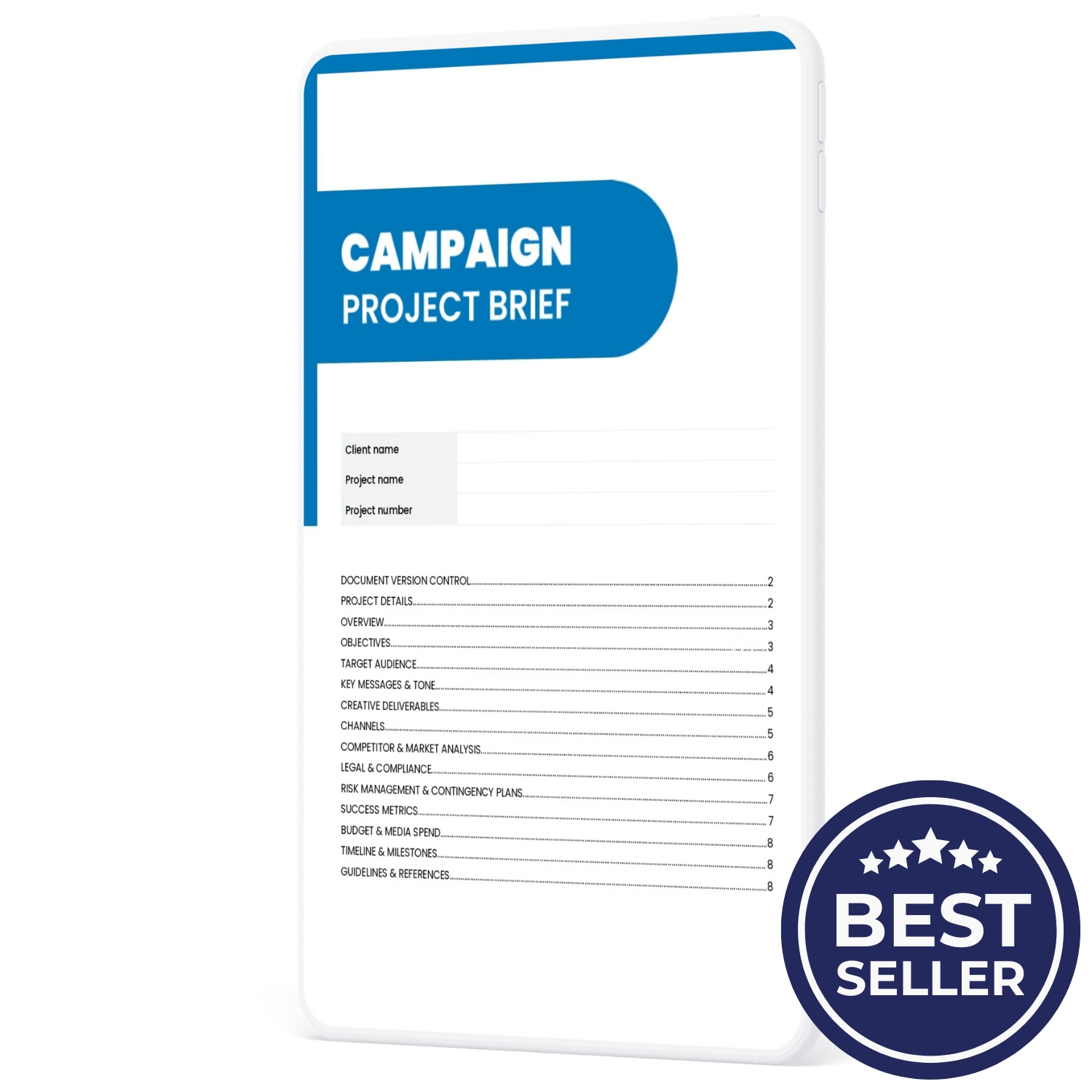
Bring confidence to your next campaign
Fast-track your planning with the Campaign Project Brief Template, our ready-to-use Google Docs framework for objectives, audiences, channels, and more.
Step 6: Launch, measure, and iterate
Even the most carefully planned campaigns require tuning once they meet actual user behavior. Once the campaign goes live, the optimization phase begins. Monitor your KPIs daily during the first week of launch. Look for anomalies:
- Is your cost-per-click unexpectedly high? Your creative might need a refresh.
- Are people clicking your ads, but your landing page bounce rate is 90%? Your landing page copy or loading speed may be turning visitors away.
Digital marketing allows us to make real-time adjustments, so be agile. By reviewing data objectively and making data-backed tweaks, you can rescue underperforming campaigns and turn good campaigns into extraordinary successes.
Common mistakes to avoid
- Most campaign problems are predictable, and that means they’re preventable. Here are 5 mistakes to watch for:
- Starting with tactics instead of goals: Choosing channels and formats before you know what you’re trying to achieve leads to busy work, not results.
- Skipping the written brief: If it isn’t written down, it doesn’t exist. Verbal agreements get remembered differently by everyone involved.
- Leaving approvals vague: Decide who signs off on what, and by when. Unclear approvals are one of the fastest ways to lose a week.
- Ignoring the post-launch plan: A campaign doesn’t end at launch. Schedule time to review results, learn from them, and apply those lessons next time.
- Doing too much at once: A focused campaign with a clear message will almost always outperform a sprawling one.
For freelancers, small business owners, and agencies alike, a structured planning process means smoother projects, happier clients, and campaigns that are easier to measure and improve. When you start with a clear purpose, define success, understand your audience, and document your plan in one place, you replace guesswork with confidence.
This post is also published on Medium.com.